
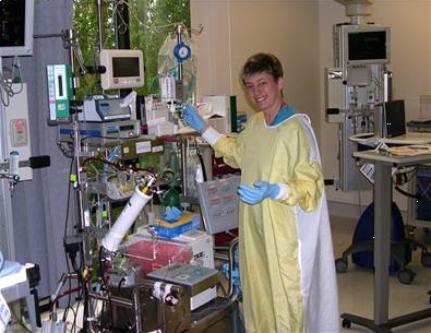
Kimberly Hiatt, a nurse of 24 years at Seattle Children's Hospital (Gabbay, 2011)
The single greatest impediment to error prevention in the medical industry is "that we punish people for making mistakes."
Dr. Lucien Leape
Professor, Harvard School of Public Health
Testimony before Congress on
Health Care Quality Improvement
Just Culture
Healthcare institutions, nationwide, have begun to adopt the model of "Just Culture". Essentially, this community practice was designed to create a learning environment when human errors occur. When systems become compromised, management should view these opportunities as an area to improve while trying to minimize the risk of harm (Marx, 2007).
Health care, without a "Just Culture" community, brings forth the "2nd and 3rd victims" resolution to what may ultimately be an organizational problem. Take this opportunity to learn about Kimberly Hiatt. Do you believe that the corrective actions of the hospital was justified? Explain the importance of organizational policies and how vulnerable an institution is when these policies are disregarded. How could health care improve in the wake of what had happened to Ms. Hiatt? Take this to a more personal level and explain how you could help or assist in a possible co-worker who may have just recently experienced such a tragedy of causing a sentinel event.
Assignment due Monday, May 18 by 6pm PST
References
Gabbay, T. (2011, June 28). Nurse Commits Suicide After Accidentally Giving Baby Fatal Overdose. The
Blaze: Health. Retrieved August 28, 2012,
from http://www.theblaze.com/stories/nurse-commits-suicide-after-accidentally-giving-baby-fatal-overdose/
Marx, D. (2007). Patient Safety and the "Just Culture". Retrieved August 28, 2012,
Vedder, T. (2011, April 19). Children's Hospital nurse under investigation ends own life [Video file]. Retrieved
August 28, 2012, from http://www.komonews.com/news/problemsolvers/120247089.html?tab=video&c=y